



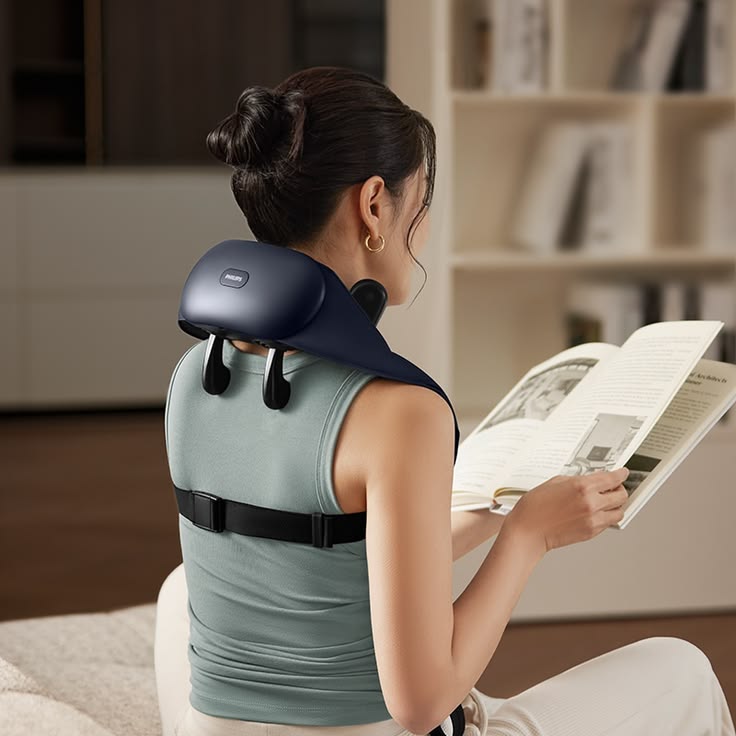
When people think about a personal massager, they usually focus on pressure, heat, or kneading style. Yet one of the most important factors in overall effectiveness is often overlooked: noise. Quiet motor technology plays a major role in how deeply the body and mind can relax during a massage session.
A powerful device that is too loud can disrupt relaxation, increase mental alertness, and reduce the overall therapeutic effect. In contrast, a quiet motor allows the body to fully engage with the sensation of massage, creating a more immersive and calming experience.
Why Noise Matters in Relaxation
Relaxation is not only physical—it is also neurological. The brain constantly processes sensory input, including sound. If a device produces excessive noise, the nervous system remains partially alert Neck shoulder massager.
The Stress Response to Sound
Loud or irregular mechanical sounds can:
- Keep the brain in a slightly alert state
- Reduce the feeling of comfort
- Interfere with deep relaxation
- Make it harder to “switch off” mentally
Even if the massage is physically effective, noise can limit its psychological benefits.
How Quiet Motors Improve the Massage Experience
Modern personal massagers increasingly use advanced motor systems designed to minimize noise without reducing performance.
1. Reduced Auditory Distraction
Silent or near-silent operation allows users to focus on physical sensations rather than mechanical sound. This deepens the relaxation response.
2. Enhanced Nervous System Relaxation
When auditory stress is minimized, the parasympathetic nervous system (responsible for rest and recovery) can activate more effectively.
3. Better Sleep Preparation
Quiet devices are especially useful in evening routines, where reducing stimulation is essential for sleep readiness.
What Makes a Motor “Quiet”
Quiet motor technology is not just about reducing volume—it is about engineering efficiency.
Brushless Motor Design
Many premium massagers use brushless motors, which reduce friction and mechanical noise compared to traditional brushed motors.
Vibration Control Systems
Internal stabilizers reduce unwanted vibration transfer, which is a major source of noise in lower-quality devices.
Balanced Mechanical Movement
Evenly distributed motion reduces irregular sounds caused by uneven pressure or movement.
Sound-Dampening Housing
Some devices include insulated casing materials that absorb mechanical noise before it reaches the user.
Quiet Operation vs. Powerful Performance
A common misconception is that quiet devices are weaker. In reality, modern engineering allows both power and silence to coexist.
Efficiency Over Raw Force
Instead of relying on noisy, high-friction movement, advanced systems use efficient torque delivery to maintain strong kneading with less sound.
Controlled Pressure Output
Smooth, consistent motion reduces mechanical strain, which lowers noise without sacrificing effectiveness.
Why Quiet Massagers Feel More Effective
The perception of effectiveness is closely tied to sensory experience.
Increased Body Awareness
Without noise interference, users become more aware of pressure, warmth, and muscle release.
Deeper Relaxation Response
The brain interprets a quiet environment as safer, allowing muscles to relax more fully.
Longer Comfortable Use
Lower noise makes longer sessions more enjoyable and less mentally fatiguing.
The Role of Quiet Motors in Stress Relief
Stress relief depends on reducing both physical and mental tension. Quiet operation supports both.
Physical Relaxation
Muscles release tension more easily when the nervous system is calm.
Mental Calmness
A quiet environment helps reduce cognitive load and supports emotional relaxation.
Improved Breathing Patterns
Users are more likely to breathe deeply and naturally when not distracted by mechanical noise.
Ideal Environments for Quiet Massagers
Silent operation is especially valuable in everyday situations.
Home Use
Maintains a calm environment without disturbing others in the household.
Office Breaks
Allows discreet use during short breaks without drawing attention or distraction.
Evening Relaxation
Supports winding down before sleep without overstimulation.
Common Noise Sources in Low-Quality Massagers
Understanding what creates noise helps highlight the importance of better design.
Poor Motor Alignment
Misaligned components can create uneven vibration and sound.
Excess Friction
Low-quality internal parts generate mechanical noise during movement.
Lack of Internal Cushioning
Without dampening materials, vibrations transfer directly to the outer shell.
How Quiet Technology Enhances Long-Term Use
Devices that operate quietly are more likely to be used consistently.
Higher User Comfort
If a device is pleasant to use, it becomes part of a regular routine.
Reduced Mental Resistance
Users are less likely to avoid sessions due to noise concerns.
Better Habit Formation
Comfortable sensory experience encourages consistent relaxation habits.
Pairing Quiet Operation with Other Features
Quiet motor technology works best alongside other therapeutic elements.
Heat Therapy
Warmth enhances relaxation while silence supports mental calm.
Kneading Motion
Smooth, quiet kneading feels more natural and human-like.
Ergonomic Design
Proper fit ensures pressure is felt, not noise.
Why Silence Feels “More Premium”
Quietness is often associated with quality because it reflects precision engineering.
Smooth Mechanical Performance
Less noise usually means better-balanced internal movement.
Attention to Detail
Noise reduction requires careful design, not just stronger parts.
User-Centered Experience
Silent devices prioritize comfort over mechanical output alone.
Final Thoughts
Quiet motor technology is not a secondary feature—it is a core part of effective personal relaxation. A massager that operates silently allows the body and mind to fully engage with the therapeutic experience, enhancing both physical relief and mental calm.
When combined with heat, kneading, and ergonomic design, silent operation transforms a simple device into a deeply immersive relaxation tool. In a world full of constant noise and stimulation, silence itself becomes one of the most powerful elements of recovery and self-care.
