



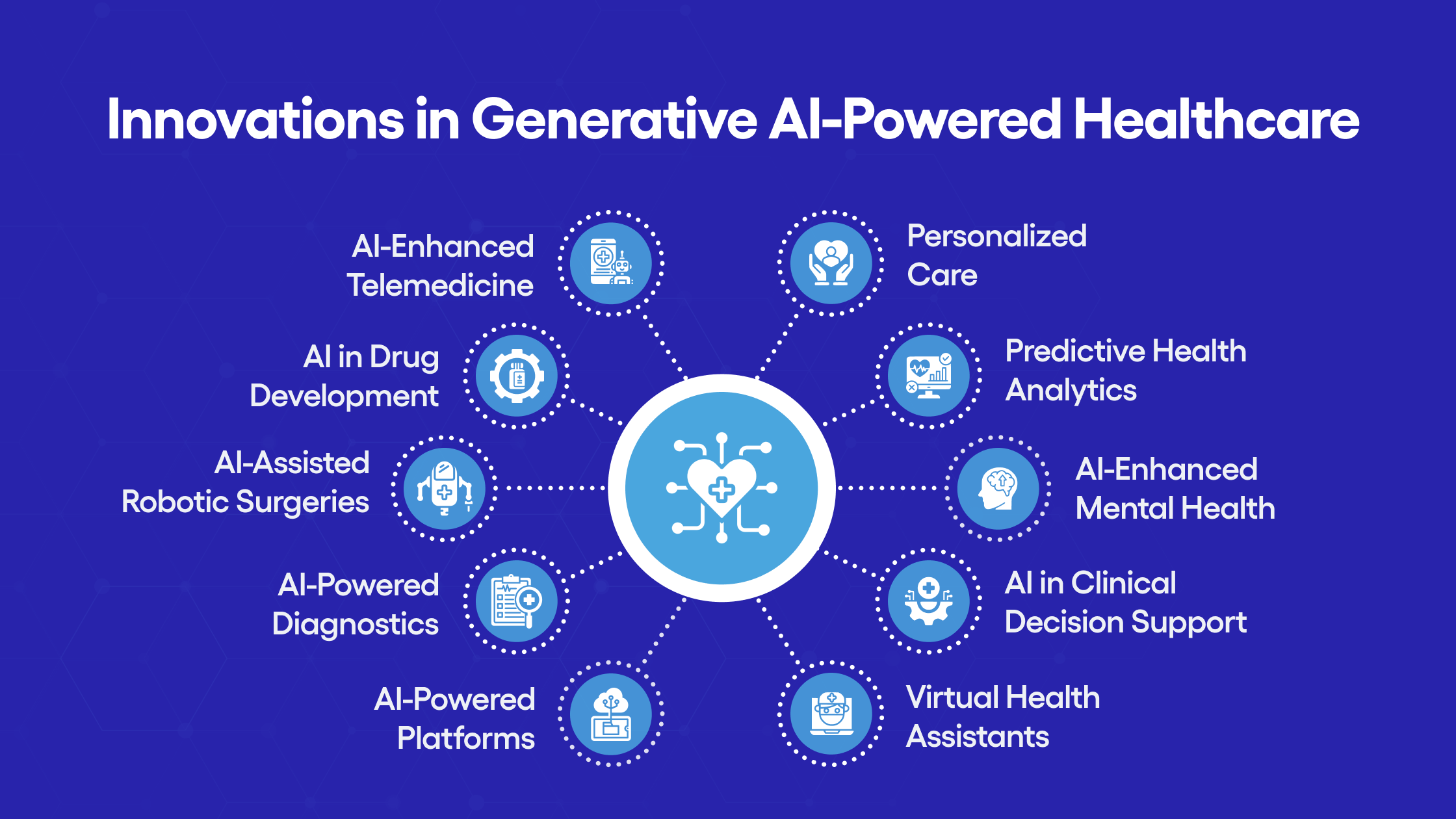
Healthcare AI is experiencing a period of rapid maturation. After years of promising pilots and disappointing production deployments, a new generation of Generative AI for Healthcare solutions is delivering genuine clinical and operational value. But healthcare AI success is highly dependent on the quality of the GenAI Solutions Provider — because healthcare is not a domain where generic AI approaches succeed. It demands specialisation, regulatory knowledge, and a commitment to clinical safety that most AI providers do not possess.
Healthcare-Specific Requirements
The requirements for a GenAI Solutions Provider in healthcare go far beyond typical enterprise AI. Healthcare AI must meet HIPAA data privacy requirements (and equivalent frameworks in other jurisdictions) as an absolute baseline. For clinical applications, it must also meet FDA guidance on AI/ML-based software as a medical device — a framework that requires clinical validation, performance characterisation, and post-market surveillance.
Generative AI for Healthcare must be designed with clinical safety as a first-class concern. This means explicit mechanisms for expressing uncertainty, declining to make clinical recommendations beyond the validated scope of the system, and maintaining audit trails that support accountability and regulatory inspection.
Evaluating Provider Healthcare Expertise
When selecting a GenAI Solutions Provider for healthcare, the evaluation criteria are substantially different from those applied in other industries. Look for providers with demonstrable experience deploying AI in clinical or administrative healthcare settings — not just providers with general AI credentials who are offering to apply their skills to healthcare.
Specific evidence to look for includes: prior deployments in similar healthcare settings (hospital, payer, life sciences); demonstrated familiarity with clinical workflows and data standards (HL7 FHIR, clinical coding systems); experience navigating HIPAA compliance for AI systems; and a track record of working successfully with clinical stakeholders — physicians, nurses, care coordinators — who are often the most important and most challenging end users of Generative AI for Healthcare applications.
The Role of Clinical Validation
A responsible GenAI Solutions Provider in healthcare will insist on rigorous clinical validation before production deployment — not just technical testing. Clinical validation involves testing the AI system against real clinical scenarios with input from qualified clinicians, assessing whether its outputs are accurate, useful, and safe across the range of situations it will encounter in production.
Conclusion
Generative AI for Healthcare holds genuine transformative potential — but realising it requires more than technical capability. It requires a GenAI Solutions Provider who understands the clinical environment, the regulatory landscape, and the human factors that determine whether AI tools are adopted or abandoned. Choose your healthcare AI partner with the same care you would apply to any clinical safety decision.
