



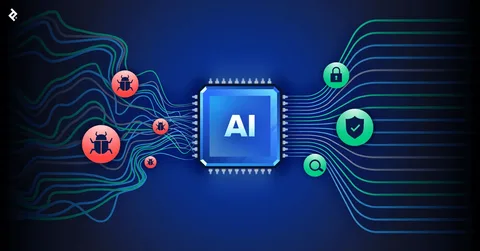
The recent reports indicate that AI is no longer experimental in the field of quality assurance; it has become the foundation of modern testing. According to surveys, virtually every developer is now free to use AI coding tools, and a huge percentage of them already do so somewhere in their workflow, making the code-writing process faster and detecting bugs earlier. Meanwhile, market research projects the worldwide software-testing market to be between tens of billions, with rapid year-on-year development and growth, and the test automation specialized segments at even greater rates.
In conjunction with unrefined market expansion, QA is no longer about manual, repetitive inspections but about smart, autonomous testing: not only are organizations scaling agent-like AI systems into production, but testing vendors also discuss autonomous agents writing, executing, and maintaining tests. The changes imply that the release process is swifter with reduced regressions, coverage of edge cases, and easily interpreted risk signals to the product teams that are a result of intelligent tooling provided by the leading software testing companies.
Why AI matters for QA right now
The software projects have never been as complicated. The number of platforms and integrations, including the web services, embedded systems, and cloud applications, as well as automotive software development, makes exhaustive manual testing an impossible task. AI assists in learning by code, logs, and prior test runs to prioritize tests, construct high-value test cases, and bring to the surface likely points of failure before they can be noticed by customers. Smart testing companies use domain knowledge and AI models to customize testing to every product – be it a mobile application, a cloud API, or even safety-critical automotive software.
Core AI capabilities changing QA
- Test generation and maintenance – AI can create unit, integration, and UI tests based on code or user stories and update said tests as the app evolves. This cuts the time engineers spend on repairing brittle tests and maintains regression suites in good condition.
- Smart test selection and prioritization — Using AI, instead of running all tests continuously, predicts which ones are most likely to fail due to recent changes and saves costly CI time, and provides quicker feedback to the developers.
- Visual and exploratory testing – Computer vision models identify UI regressions and layout breaks that simple assertions cannot identify. Bots that operate using AI also browse applications and discover routes that human testers may have overlooked.
- Log analysis and root cause – The AI can identify similar issues when something goes wrong and propose likely root causes to enable teams to debug bugs more quickly and prevent firefighting.
- Performance + anomaly detection- ML models identify minor performance declines and anomalies in test runs or production telemetry way before they can be noticed as user-facing outages.
What smart Software Testing Companies bring to the table
QA suppliers are not all equal. The three best Software Testing Companies combine deep testing, engineering rigor, and AI-first tooling. Rather than just selling tools, they help integrate AI into delivery lines, train teams to use AI-assisted testing, and evaluate results to measure and repeat improvements. This matters especially in businesses like Automotive Software Development, where safety standards and regulatory audits require traceable and explainable testing results.
Best-in-class vendors can also assist organizations in transitioning off fear of automation (loss of jobs, unreliable tests) to a more sustainable adoption journey: begin small, demonstrate ROI with specific suites of automation of high value, and expand AI utilization to maintenance and coverage.
Real business benefits
- Quick releases: Teams also receive feedback in hours and not days because they can only run tests that matter, and they can also automatically generate tests.
- Increased dependability: AI identifies non-obvious edge cases and minimizes regressions, which bleed over into production.
- Reduced quality cost: Smarter test selection and manual reduction minimize the CI cost and tester time. AI gives developers better failure messages and prioritized proposed fixes. As a result, developers spend less time debugging and more time building.
- Regulatory preparedness: In Regulated industries, such as Automotive Software Development, an AI can generate audited trails of which test was performed, the reason it was selected, and what evidence was generated – a significant aid in compliance audits.
Practical steps teams can take today.
- Begin with data: Get test history, logs, and issue data. AI requires effective inputs to provide valuable outputs.
- Automate the high-value tests: Firstly, target the critical flows and integration points that most pain for customers.
- Use explainable AI tools: Use systems that provide a reason why a test was prioritized or why a failure was notified about – this is what creates trust.
- Measure all: Time to detect, time to repair, false positive rates, and runtime of the test suite should indicate a definite ROI.
- Smart partnering: Find Software Testing Companies that know your field. In the case of Automotive Software Development, the selected providers must have experience in safety standards, hardware-in-the-loop development, and low-latency systems.
A Common Myth
Myth: Web applications are the only parts of AI testing.
The truth: AI automates monotonous jobs and supplements human reasoning. QA engineers move to test strategy, AI output validation, and solving complicated situations.
Reality: AI is useful in the mobile field, embedded field, and even in automotive software development, where scenario simulation and model-based testing are beneficial.
What to watch next
Implement the next stage of autonomy in AI agents: (suggesting entire test plans), creating environments, and repairing flaky tests. Conscientious AI governance will also become increasingly important: teams will require traceability, checks of bias, and human-in-the-loop controls in order to have test decisions that are auditable and safe. In the case of companies that assess vendors, the question will be the following: Can this software testing company present the outcomes and demonstrate how AI has achieved its conclusions?
Conclusion
AI in QA is no longer a fantasy of the future – it is how intelligent testing firms are enabling teams to deliver quality software at an expedited rate today. It is true that whether you are creating cloud-native applications or developing Automotive Software, the perfect combination of automation, artificial intelligence, and human skills can transform QA into a competitive edge. To reduce production surprises and have a better understanding of how to get releases on schedule, begin by quantifying where your tests are waiting, push the software testing company, and allow AI to do the lifting for your team to the next big feature.
