


A classroom robot can be a moving lesson, a programmable tool, or a machine that helps students test an idea. Its value depends on the task around it, not on the shape of the robot.
Quick read
- Robots turn abstract code into motion students can see and measure.
- Teachers need time, training, floor space, and a clear safety plan.
- The best first use is a narrow lesson with a result students can check.
What changes in the classroom
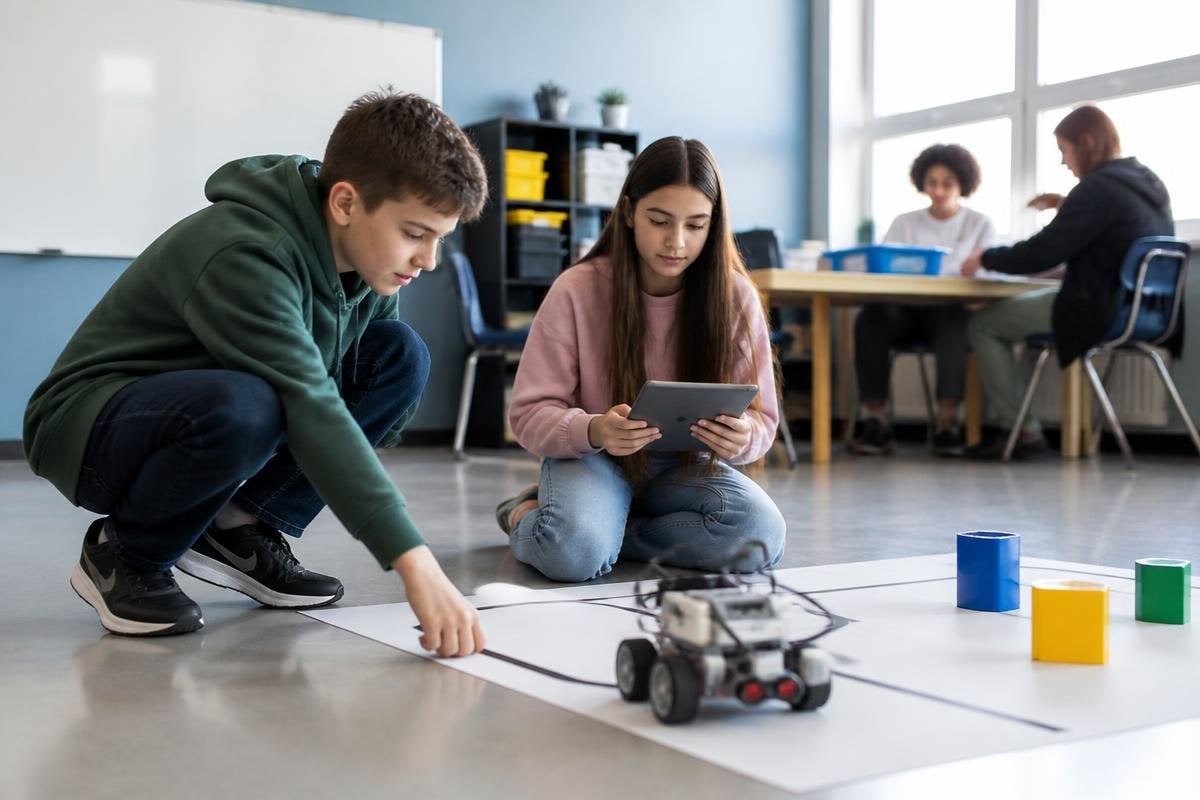
Robots give students a physical system to control. A program can move a wheel, read a sensor, sort objects, or follow a marked route. The result appears in front of the class, so students can compare their code with what the machine did.
That feedback changes the lesson. A student who sees a robot stop too late has a specific problem to fix: the sensor read the line too slowly, the motor turned too hard, or the code checked the wrong condition. The work moves from guessing to testing.
The same task can bring several subjects into one lesson. Students may use maths to measure distance, physics to discuss force and motion, and writing to explain why the robot failed. The robot gives those ideas a shared object to study.
Where robots help teachers and students
Educational robots can take several forms. A small wheeled kit may teach programming and sensor use. A robotic arm may show how a machine repeats a set path. A mobile robot may let students study mapping, obstacle detection, or remote control.
These machines also make room for different kinds of student work. One student can write code, another can measure the result, and another can check safety or record the changes. The group still needs one shared goal, or the robot becomes a toy passed around the room.
Robot lessons can also connect school work with jobs that use automation. Students see that a machine needs instructions, checks, limits, and people who can fix faults. That lesson matters more than making the robot move once.
Teachers can use Robot24.com robotics coverage to bring named machines and workplace examples into class. That gives students something concrete to compare with the lesson, while the school still has to decide what the robot can safely do and who will maintain it.
What schools need to solve first
A robot brings work into the room. Someone must charge it, store it, update its software, check its moving parts, and prepare the lesson when the machine fails.
Teachers also need a way to keep every student involved when only one person can hold the controller.
Safety needs a clear routine. Students should know where the robot may move, when its motors must stop, and who can press the emergency stop. A robot with an arm or exposed gears needs more space and closer adult control than a small classroom car.
Cost is more than the purchase price. Schools may need spare batteries, replacement parts, computers, network access, teacher training, and time for setup. A low-cost kit can still create a large workload if no one owns those tasks.
Privacy needs attention when a robot uses cameras, microphones, student accounts, or cloud software. A school should know what data the system records, where it goes, how long it stays there, and which features can be turned off.
A practical buying checklist
Use this list before a school orders equipment:
- Name the lesson: write the exact skill students will practice.
- Set the space: mark the floor area, storage place, charging point, and safe stop zone.
- Check the upkeep: list batteries, parts, software, network needs, and the person responsible.
- Plan failure work: prepare a second task for students when the robot is charging or broken.
- Set a measure: choose a result students can record, such as route error, cycle time, or code changes.
- Review data: check every camera, microphone, account, and cloud setting before use.
I’d skip any robot that has no clear lesson owner, no repair plan, and no way to measure student work. A machine that moves for five minutes may hold attention, but a machine tied to a testable task can keep teaching after the first demo.
The practical starting point is one robot, one lesson, and one result students can verify. Schools can add more equipment after that routine works.
