



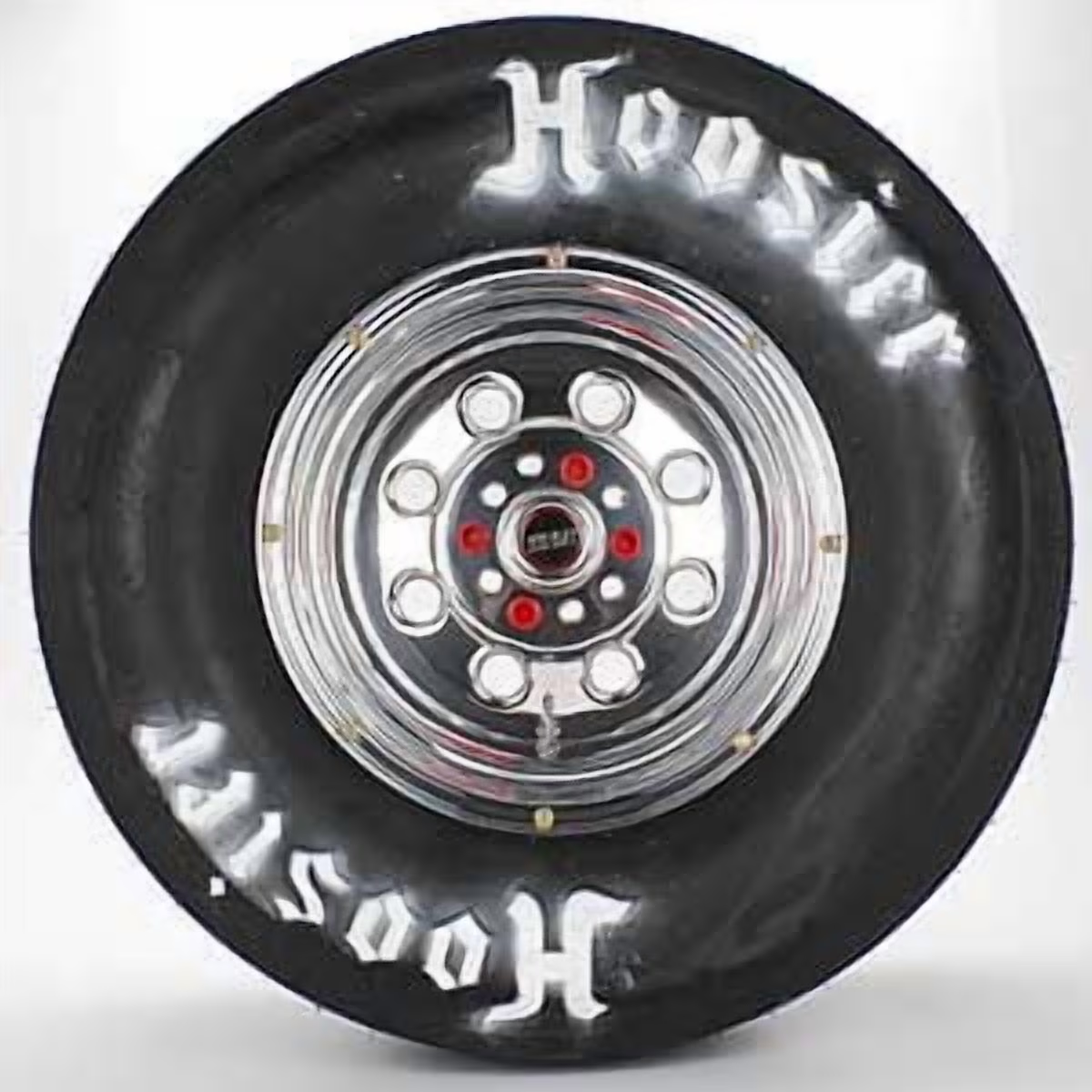
Hoosier is one of the most recognized names in motorsports, known for producing purpose-built racing tires that prioritize performance over everyday usability. However, not all Hoosier racing tires are created equal. The demands of drag racing and road racing are fundamentally different, and Hoosier designs its tires to meet those specific challenges. Understanding how Hoosier tires perform in drag racing versus road racing can help drivers choose the right setup, maximize performance, and avoid costly mistakes.
Understanding the Core Difference Between Drag Racing and Road Racing
Before diving into tire specifics, it’s important to understand how these two forms of racing differ. Drag racing is all about straight-line acceleration over a short distance, typically a quarter-mile or eighth-mile. The goal is maximum traction at launch and consistent grip throughout a brief, intense run. Road racing, on the other hand, involves navigating a circuit with corners, elevation changes, and varying speeds. It demands consistent grip, heat management, and durability over multiple laps.
Because of these differences, tires for each discipline are engineered with completely different priorities in mind.
Hoosier Tires for Drag Racing
Hoosier drag racing tires are designed to deliver maximum traction in a straight line. These tires are typically softer, more flexible, and optimized for rapid weight transfer during acceleration.
Key Characteristics of Drag Racing Tires
One of the most defining features of Hoosier drag tires is their soft compound. This allows the tire to “bite” into the track surface, especially when prepped with traction compounds. The softer rubber increases grip but also leads to faster wear.
Another important characteristic is the sidewall construction. Drag tires often feature flexible sidewalls that allow the tire to deform during launch. This deformation increases the contact patch, helping the tire grip the track more effectively when the car’s weight shifts rearward.
Tread design is minimal or nonexistent in many drag tires. Slicks are common because they maximize the amount of rubber in contact with the track. In cases where some tread is present, it is designed primarily to meet class regulations rather than improve performance.
Performance Focus in Drag Racing
The primary focus of Hoosier drag tires is launching efficiency. A good launch can make or break a drag race, and these tires are built to handle high torque and sudden power delivery without excessive wheel spin.
Consistency is also critical. Even though runs are short, drivers rely on predictable performance to improve reaction times and elapsed times. Hoosier drag tires are engineered to perform consistently under repeated high-stress launches, although they may require careful heat management and proper burnout procedures.
Hoosier Tires for Road Racing
Road racing tires from Hoosier are designed for a completely different environment. Instead of short bursts of acceleration, these tires must deliver consistent grip across a variety of conditions, including braking, cornering, and acceleration.
Key Characteristics of Road Racing Tires
Hoosier road racing tires typically use compounds that balance grip and durability. While still much softer than street tires, they are generally more durable than drag racing compounds to withstand multiple laps.
The construction of road racing tires emphasizes lateral stability. Sidewalls are stiffer compared to drag tires, allowing the tire to maintain its shape during high-speed cornering. This stability is essential for precise handling and driver confidence.
Tread patterns vary depending on the type of tire. Slicks are used in dry conditions to maximize contact with the track, while treaded versions are available for wet conditions to channel water and reduce the risk of hydroplaning.
Performance Focus in Road Racing
The key focus for Hoosier road racing tires is overall balance. These tires must provide grip during acceleration, braking, and cornering, often within the same lap. Unlike drag racing, where traction is mostly longitudinal, road racing demands both longitudinal and lateral grip.
Heat management is another critical factor. Road racing tires are designed to operate within a specific temperature range. If they overheat, performance drops; if they don’t reach optimal temperature, grip is reduced. Hoosier engineers these tires to maintain consistent performance across longer sessions.
Compound Differences Between Drag and Road Racing Tires
The compound used in a tire plays a major role in its performance. Drag racing tires use ultra-soft compounds that maximize traction for short durations. These compounds heat up quickly and provide immediate grip, but they wear out rapidly.
Road racing tires, on the other hand, use compounds that are slightly harder but more stable over time. These compounds are designed to handle repeated heat cycles and maintain performance across multiple laps. Different compound options may be available depending on track conditions, temperature, and race length.
Construction and Sidewall Design
One of the most noticeable differences between Hoosier drag and road racing tires is the sidewall design. Drag tires have highly flexible sidewalls that allow for significant deformation during launches. This helps increase traction but would be detrimental in a road racing scenario where stability is key.
Road racing tires feature stiffer sidewalls to support high-speed cornering and maintain consistent contact with the track. This rigidity improves steering response and handling precision, which are critical in competitive circuit racing.
Tire Pressure and Setup Considerations
Tire pressure plays a crucial role in both drag and road racing, but the approach differs significantly. In drag racing, lower tire pressures are often used to increase the contact patch and improve traction. Drivers carefully adjust pressure to find the optimal balance between grip and stability.
In road racing, tire pressure is used to fine-tune handling characteristics. Slight adjustments can affect cornering balance, braking performance, and tire wear. Teams monitor pressure closely throughout a race session to ensure the tires remain within the ideal operating range.
Heat Cycles and Longevity
Heat cycles refer to the process of a tire heating up and cooling down during use. Drag racing tires typically experience fewer but more intense heat cycles. Because of their soft compounds, they may lose effectiveness after a limited number of runs.
Road racing tires are designed to handle multiple heat cycles without significant performance loss. However, they still degrade over time, and managing heat cycles is essential for maintaining consistent lap times.
Choosing the Right Hoosier Tire for Your Application
Selecting the right Hoosier tire depends entirely on how the vehicle will be used. For drag racing, the priority should be maximum traction and optimal launch performance. Hoosier drag slicks or drag radials are the best choice for this purpose.
For road racing, drivers should focus on tires that offer a balance of grip, durability, and heat management. Hoosier’s road racing slicks or DOT-approved track tires are better suited for circuit use.
Using the wrong type of tire can significantly impact performance and safety. For example, using drag tires on a road course would result in poor handling and increased risk, while using road racing tires in drag racing would limit traction and reduce acceleration performance.
Common Mistakes to Avoid
One common mistake is assuming that all racing tires perform similarly. In reality, each tire is engineered for a specific purpose, and using the wrong type can lead to suboptimal results.
Another mistake is neglecting proper tire setup. Factors such as pressure, temperature, and alignment play a significant role in tire performance. Even the best Hoosier tires will underperform if not set up correctly.
Finally, some drivers overlook the importance of track conditions. Drag strips are often prepped with traction compounds, while road courses vary widely in surface and grip levels. Choosing the right tire compound and setup for the specific conditions is essential.
Conclusion
Hoosier tires are designed with precision and purpose, making them a top choice for both drag racing and road racing. However, the differences between these two disciplines require fundamentally different tire designs. Drag racing tires focus on maximum straight-line traction and rapid acceleration, while road racing tires emphasize balance, durability, and consistent performance across a range of conditions.
Understanding these differences allows drivers to make informed decisions, optimize their setups, and get the most out of their vehicles. Whether you’re launching down a drag strip or carving through corners on a road course, choosing the right Hoosier tire can make all the difference in achieving peak performance.
